Happy Hallowe’en 2017
Ghouls and ghosts vanquished
As coulrophobia reigns.
Stop clowning around!


Philosophical Photography, Percontation, Prose, Poetry, Parables, Pottery & Politics… Phew!
Ghouls and ghosts vanquished
As coulrophobia reigns.
Stop clowning around!
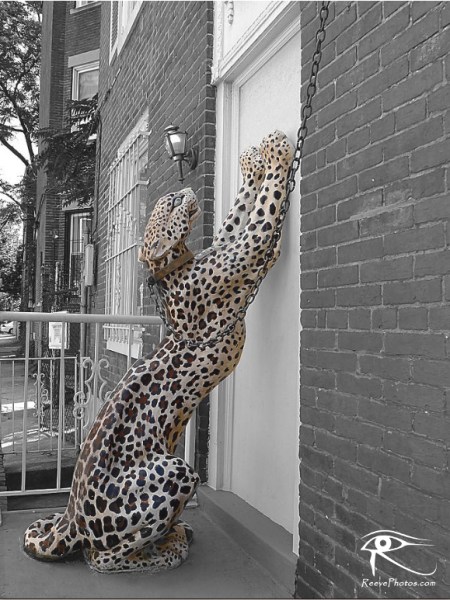
It’s amazing what you can find in the most normal of settings, and unexpectedly. All you have to do is keep your eyes open and actually look at your surroundings. For example, Philadelphia seems to be full of surprises such as this wonderful sculpture of a leopard on South 20th Street and Manning Street near Rittenhouse Square. One story has it that it the building which it is attempting to get into used to be a lingerie store and that this was used as marketing. The store has long gone but the leopard remains.
Last week I went back to the ceramics studio after a break of a couple of months or so. Over the summer the art center runs a large number of classes for children and the place is very busy. I was finding it a bit hard to get started again and then I looked through some of the ceramics that the kids had created over the last few weeks.
I think they have done a fantastic job. One of the best things about the children’s work is that many of them (especially the younger ones) have no real constraints in their minds. They are free to just take an idea or prompt from the teacher and run with it.
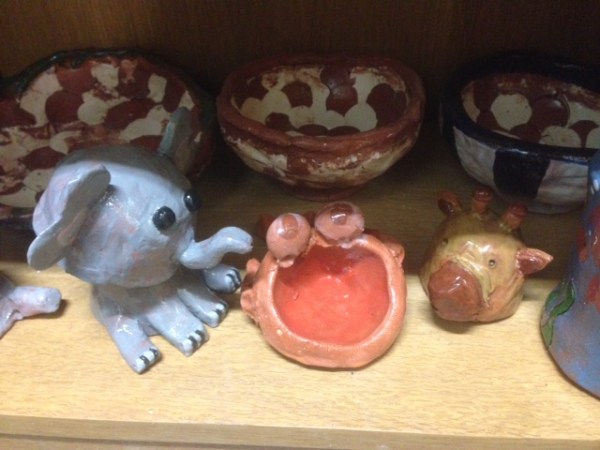


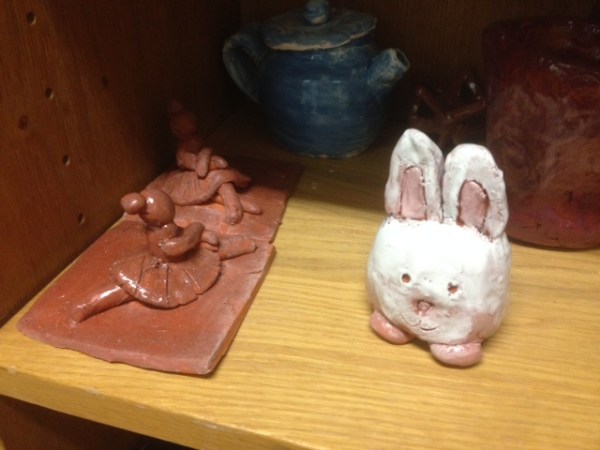


After seeing these great works, I am reinvigorated for the fall ceramic season…!
The King
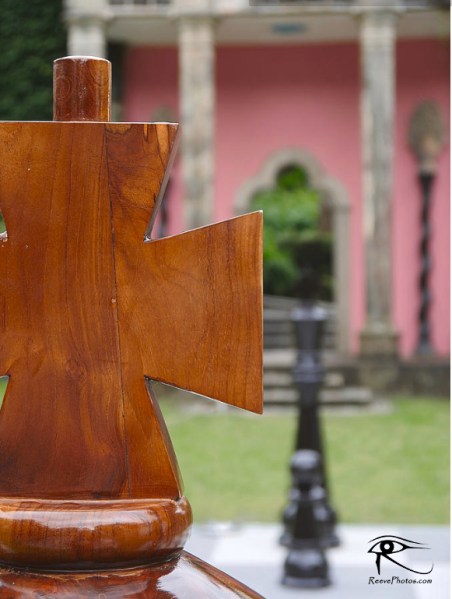
He looked across his Kingdom to see his opponent in the distance, protected by his foot soldier. I have this covered, he thought to himself smugly. But the carefully planned trap was sprung, and to his horror the Knight bounded across to his left and hemmed him in the Rook’s grasp. It was all over. Checkmate. He slumped and fell to his knees.
~
The Queen

She stood to the edge of the court and observed her husband’s opponent. He had a smug look on his face, but she would soon end that. How dare he attack their city? She stood tall, clear in the knowledge that she was the most powerful player here. She didn’t even have to move this time. A barely perceptible nod to her Knight and their pre-planned trap was sprung. The color drained from their enemy’s face and he crumpled to his knees, defeated…
~
The Bishop

To be honest, this was the part of his role he disliked most. He had never really felt comfortable being brought into the battle. It seemed to go against his credo. Then again, the Kingdom had to be defended otherwise all his Good Work could not be continued. This had been a particularly hard fight. Looking at his fallen comrades and his bloodied broadsword he prepared for the next onslaught. Then he saw the Knight gallop towards the enemy in a bold move and suddenly it was over. He had lived to fight another day! But only after he had ministered to the wounded…
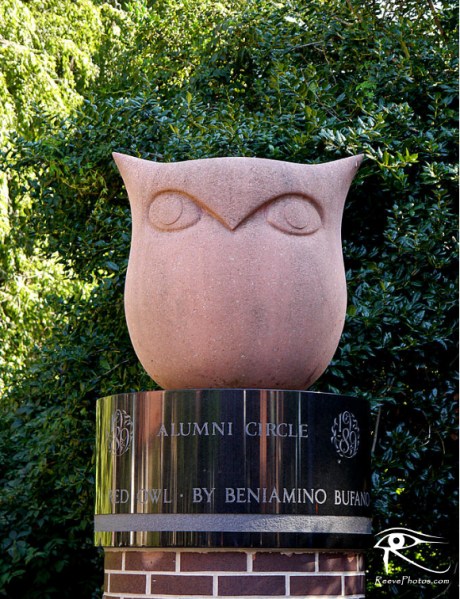
I am shocked! I was up at Temple University in Philadelphia earlier this week dropping off my daughter and when I was explaining the beautiful statue of the Red Owl at Alumni Circle on Liacouras Walk to another parent when I noticed it has been removed! I love this wonderful marble work by Beniamino Bufano and the fact that it was part of an installation that included an acoustic wall that had been specially designed to show off the properties of sound reflection. The statue was dedicated in 1988 and now, under 30 years later it has disappeared!
In its place there now stands a larger, more sinister looking owl with outstretched wings. It was still attached to its supporting crane this week so it must have been a recent change. I can find no mention of what has happened to Bufano’s classic – I hope it is relocated but it is a shame it was moved in the first place. I will miss it.
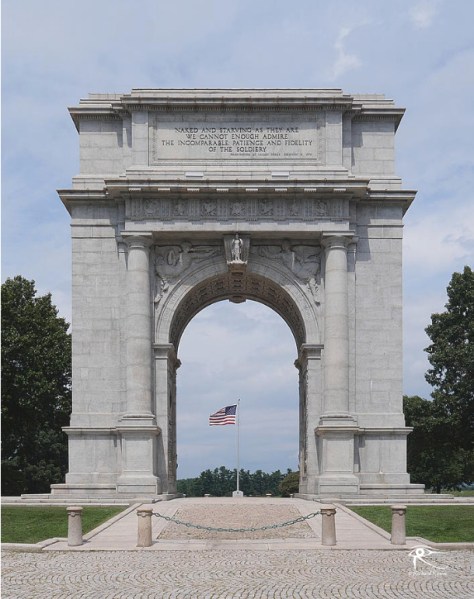
I hadn’t picked up my camera for over a month, but yesterday I had the opportunity to visit Valley Forge National Historical Park with my daughter and her friend. We hired bicycles for two hours and cycled around 9 miles through this beautiful area. It was hard work on some of the unpaved trails but well worth the effort.
There were no battles fought at Valley Forge, but lack of supplies was so severe that starvation and disease saw 2,500 men and over 700 horses dead during the six months the Continental Army was encamped there from December 1777 to June 1778.

Yet, despite the appalling living conditions, the Continental Army was transformed from a rebellious force into a fully fledged army that was eventually able to fend off the British Army and allow the colonies to establish themselves as an independent nation.
How?
The weather in February 1778 eased and became milder, alleviating some misery and Washington’s appointment of the resourceful General Nathaniel Greene as Quartermaster enabled better supply lines to be established. Successful petitioning of the Continental Congress finally allowed funding for the army and then, in March 1778, the mercenary ex-Prussian Army drill-master “Baron” Friedrich Wilhelm von Steuben arrived at camp. Though he spoke no English, von Steuben, with the help of translators, and due to his peculiar style of actually interacting directly with the men, was able boost morale and to train the American soldiers. His work became “The Blue Book” (Regulations for the Order and Discipline of the Troops of the United States) and would remain as the official training manual for over 30 years.
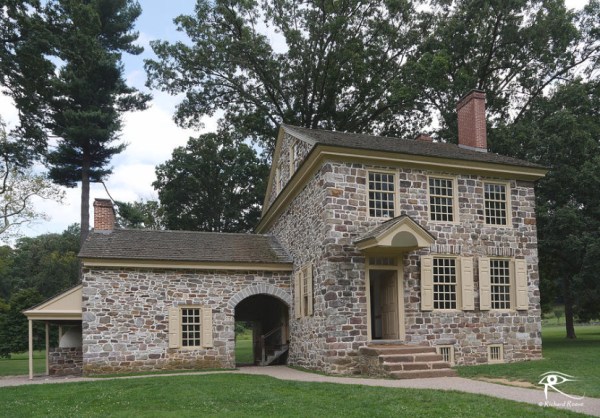
With the Treaty of Alliance with France signed in February 1778, ensuring supplies and support, and a well trained army behind him, Washington was able to leave Valley Forge after six months and face the British.
The rest, as they say, history…
A century ago today, on 31st July, 1917 the Third Battle of Ypres was begun, later to be known as Passchendaele, after the Belgian village some five miles away. It was to be a long, hard, miserable battle.
This push towards the German lines was mounted at the command of General Haig who was feeling confident following the success of the Messines Ridge attack some 6 weeks earlier.
Shelling by both armies over the previous days had turned the ground to mud and this was soon followed by the worst rain in over 30 years, causing conditions to become so horrendous that many men and horses drowned in the ensuing quagmire.
The battle was to rage for 3 months and casualty toll ran to 325,000 Allied troops and 260,000 German soldiers, or 22 men for every foot of ground traveled before reaching Passchendaele.
The churning up of so much land caused disturbed seeds to bloom in vast numbers following the end of World War I. This was especially true for field poppies, whose seeds can remain dormant for many, many years. Every time I see a field of poppies I think of the poor, brave soldiers from both sides of the war, whose lives were made miserable for a long period and then cut short, usually in terrifying and horrible ways.

Lest We Forget…
~Richard
The town of Harwich, situated on the mouth of the the Rivers Stour and Orwell has been an important port for centuries. The town’s name derives from the Old English here-wic, meaning “military settlement” and received its charter in 1238, although it is likely it was established long before this time.
The Royal Navy established a dockyard here in 1652 for around 60 years, and although there is no longer a navy presence here the port was important during World Wars and has been an important commercial port for “travel to the continent” for decades. There is a large area we used to simply refer to as “The War Department” as a kid which is filled with reinforced concrete bunkers, towers and gun emplacements and was a wonderful place to play as child. I recall stories being told of how the guns there shelled the German battleship Scharnhorst when it passed along the coast, although I cannot verify them.
There is also an older fort, simply called The Redoubt, that was built in 1809-10 to defend against Napoleon, which again emphasises the strategic position of the town over the centuries.
Harwich is also famous for being the birthplace of not only the Captain of Mayflower, Christopher Jones (c. 1570) but also the famous ship itself. The Mayflower, which went on to carry The Pilgrims to the New World, was likely built at Harwich and was certainly registered as being “of Harwich” in the 1609-11 Port Books.

A walk along the docks and port of Harwich to Harwich Green also reveals an unusual building – the treadwheel crane. Using mechanics that was largely unchanged since the Roman period this is a human-powered lifting device was built in 1657 in the Naval Yard. It was moved to the Green in 1932, and is the only double wheel treadmill crane in Britain. It fascinated me as a child, and seems to stand as a sort of testament to past labour associated with the town.


Trinity House, the official keeper of lighthouses and deep sea pilotage, has been an important part of the town for a long time with pilot boats guiding vessels into the ports and lightship and buoy maintenance being conducted here.
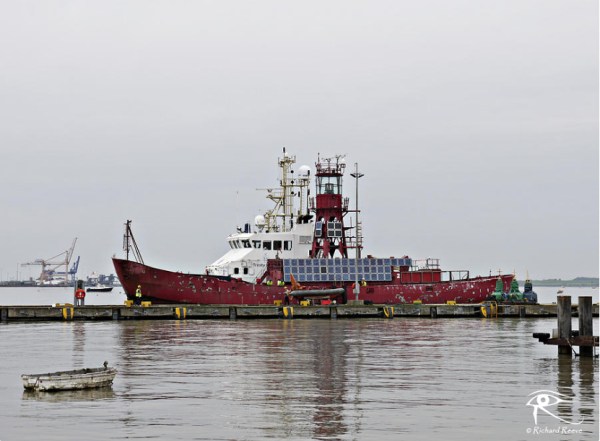
Unlike many coastal towns, Harwich never really became a seaside resort, maintaining its position as a “working town” and letting the neighboring town of Dovercourt take the tourists.
Nevertheless, it’s not all work, and there is fun to be had if you look for it…
It was a choice she never wanted to make. In fact, choice wasn’t really the word for it. She had to do it. No-one in their right mind would give up a family, home, lifetime of work, a successful career as an engineer and a middle class job. Unless they had no choice.
She thought back to the ones she had left behind, lost forever to the incessant bombardment. For what? A few square feet of a town that had been raised from the desert over a period of two thousand years, and now razed to rubble and would soon become sand again. That was why she had left. She had no-one left to save but herself.
How ironic that she was now standing on sand again, although this time with the sea foaming between her toes.
She looked up at the fence. So this was what salvation looked like?

Nestled on the Tendring peninsula on the east coast of England, and providing seaside entertainment for the masses for over 150 years, the town of Clacton may seem like any other British seaside town. Clacton came to prominence in 1871 when it was founded by Peter Bruff as a seaside resort, largely for Londoners to escape the city. He built the pier, which still stands today, and steamer was the main method of reaching the town until the road and rail system caught up.


The heyday of the town was really the middle decades of the twentieth century when there was a Butlins Holiday Camp and many hotels and guest houses to entertain the day trippers and summer holiday makers. Then along came cheap flights to more exotic locations and, like so many British resorts, there was a significant downturn in the economy.
Even in the 21st century the town still has a significant number of visitors and people enjoying the sandy beaches, and going on the rides and other amusements on Peter Bruff’s original pier. When we were kids there were dolphins and orcas kept in the swimming pool on the pier, but thankfully that’s gone now.
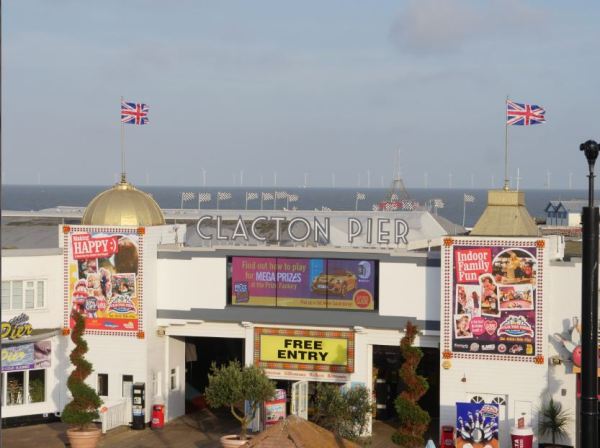

The landscape has also changed a bit with the offshore wind farm on Gunfleet Sands but all in all a pretty standard town that has had its ups and downs…

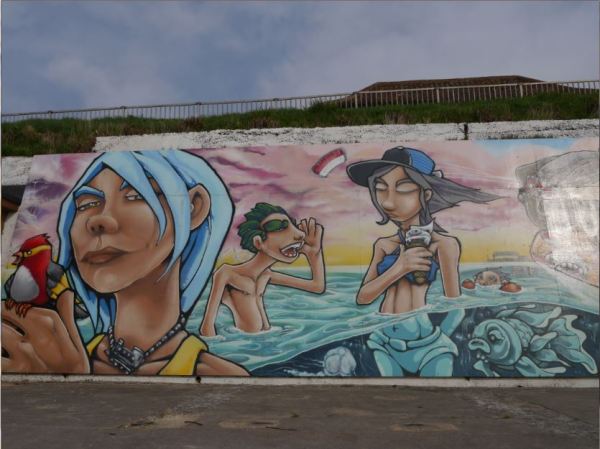
… Or is it?
Well, there are two things that are also uniquely interesting about this town, so let me explain.
Firstly, Clacton was the site of the first civilian casualties in World War II when Frederick and Dorothy Gill were killed by a Heinkel bomber that crashed into their house on May 1st, 1940. Little is made of this fact, although I clearly recall a plaque on a bench on nearby Skelmersdale Road detailing this tragedy when I was a teenager.
Secondly, although Clacton is primarily known as a typical Victorian seaside town, the area slightly inland at Great Clacton was inhabited by the Celts and there is some evidence of Roman involvement too at the coast. The most amazing fact though is that during the paleolithic period, the area was used for flint mining and tool manufacture. And in 1911 there was uncovered the “Clacton Spear” a wooden yew spear which, at 420,000 years old is the oldest known wooden tool created by man. It is, in fact, even older than Homo sapiens and was carved by our pre-ancestors Homo erectus. An entire period of human development, Clactonian, was named after the town and describes the fascinating industry of flint working and tool making.

How Quintessentially British!
Stuff that interests Mr Reid, a physicist and teacher
Sharing Great Blog Posts
Travelling the overcast isles
Inspiration for meeting life's challenges.
a resource for moving poetry
Welcome to my world.
Mind over matter
Musings on a mad world
Travel. Climbing. Characters. True stories, well told.
Adventuring the globe whilst based in the beautiful PNW, with a focus on fitness & adventure travel, conservation and a healthy balanced lifestyle. All with my beautiful partner in crime, Stephanie!
Games, Illustrations and Short Stories
Success By Design
Never get lost in the Sauce
Photo Book Store
Happy Eating
Cooking, gardening, traveling and photographing around the globe
storytelling the world
Perspectives on Lifelong Learning, Education, & The Arts

 searching4theshot