
As we struggle though another week of heatwave here on the East Coast, and watch the geopolitical storms unfurl around us, I thought I’d clear my mind and reminisce about sitting on Brighton Beach (or rather the pebbles) a few years ago.
Chill out!

Philosophical Photography, Percontation, Prose, Poetry, Parables, Pottery & Politics… Phew!
As we struggle though another week of heatwave here on the East Coast, and watch the geopolitical storms unfurl around us, I thought I’d clear my mind and reminisce about sitting on Brighton Beach (or rather the pebbles) a few years ago.
Chill out!
Today is the Summer Solstice of 2024 in the Northern Hemisphere. Colloquially, it’s the longest day although really all days are 24 hours in duration, so what we mean the most sunlight. It’s also known as midsummer, although it’s really only the beginning of the summer heatwave in my locale.
Today ought to be a positive day of reflection and as most of us aren’t Druids with access to Stonehenge to celebrate the sunrise or sunset perhaps we should just take a few minutes out of the day and reflect on all the good things that are going on in our lives.
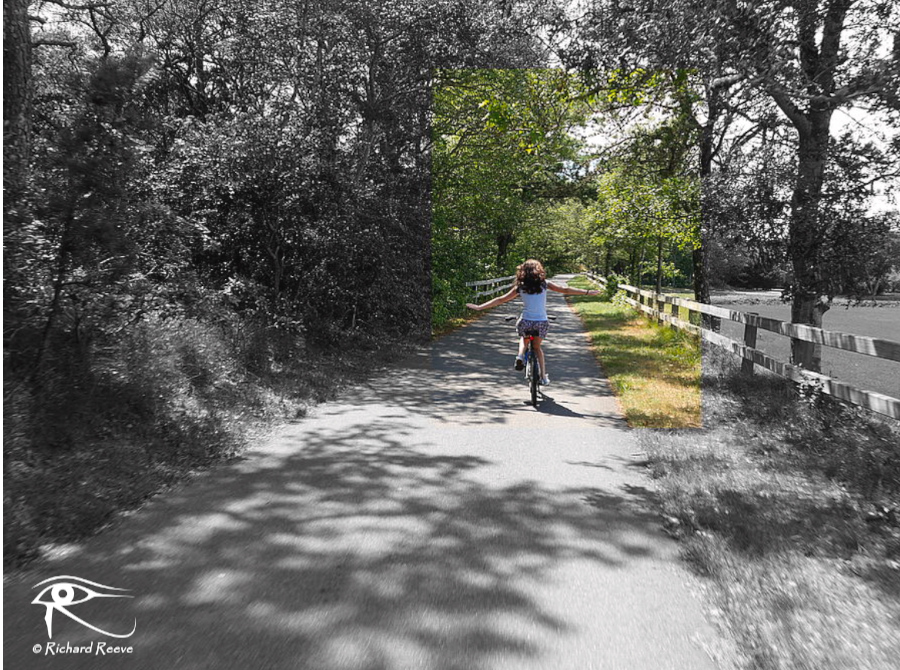
I was looking through an image to accompany this post and I found this one from 8 years ago which I think sums up a nice positive attitude.
Today is a day to just let go of the handlebars of life and embrace what is ahead of you!
I cannot believe I haven’t posted anything from my trip to Australia last year, so here’s a starting point in the form of a Haiku, based on an image that you may not expect from a tourist (although it is a lesser-known UNESCO Heritage site):
Steel giants stand tall,
Silent cranes against the sky,
Harbor whispers peace.

In the heart of Montevideo, Uruguay, where the urban fabric weaves a tapestry of modernity and tradition, there lies a structure that defies the ordinary – Castillo Pittamiglio. With its eclectic façade and enigmatic presence, this “castle” provides a gateway to the past, as a monument that harbors tales of alchemy and mysticism.
Built by the architect and alchemist Humberto Pittamiglio, the castle stands as a testament to a life dedicated to the esoteric and the profound. From the outside, the building captivates passersby with a replica of the iconic Greek sculpture, the Winged Victory of Samothrace, emerging from a round brick tower, crowned by a coat of arms.
Stepping inside, you’re transported into a world where every corner whispers secrets of ancient wisdom. The castle’s history is shrouded in stories, some even claiming it once housed the Holy Grail. The interior is a labyrinth of rooms and corridors, each adorned with alchemical, Templar, Rosicrucian, and Masonic symbols. There are several puzzles and conundrums within the building which make you think deeply about the present and past.
Pittamiglio believed in the metaphor that life is a journey on a ship, and he reflected this in the castle’s never-ending construction, which continued until his death. It’s said that this was also a representation of the ‘wet path’ of alchemy.
In short, Castillo Pittamiglio is more than just a building; it’s a narrative woven into the fabric of Montevideo’s culture. It invites the curious and the seekers to explore its depths and perhaps, in its shadows, find a piece of the eternal quest for knowledge and transformation.

I have visited Washington, DC several times over the years but I must admit I had never walked around the Tidal Basin in its entirety and visited the Memorial to Franklin Delano Roosevelt. This tribute to FDR and his four terms as a US President is quite unusual. A strikingly different approach was taken in its design when compared to the somewhat more traditional (and arguably more photogenic) edifices built as homages to Presidents Washington, Lincoln and Jefferson.
FDR was an interesting president, hiding his disability at a time when it would have been considered weak to be anything less that an idealized “true man.” He was far from perfect, as the lack of dealing with racial equality on his watch attests, but he did make significant changes to the American way at a time of great turmoil and hardship, leading the nation through both the aftermath of the Great Depression and World War II.
The memorial is arranged to explore each of his four terms in office and, among the walls and sculptures contains several pieces of text carved into the marble. One of these quotes struck a chord with me for it’s prescience, and in my opinion, should also be reproduced over the doorway of the Oval Office so that every occupant, of every political persuasion, can contemplate it when seated at their desk.

We visited Washington, DC last weekend to catch sight of the early cherry blossoms. As we were enjoying a walk around the Tidal Basin near the Jefferson memorial we saw this withered cherry tree with flooded roots yet clinging to life sufficiently to put out some glorious blossom.
This is Stumpy, the beloved cherry tree that had apparently captured hearts as a symbol of resilience in the face of climate change. And s/he is bidding us farewell. The National Park Service announced that Stumpy, along with 158 other cherry trees, will be cut down to facilitate vital seawall repairs in the Tidal Basin and West Potomac Park.
Unfortunately, despite the emotional attachment to Stumpy, logic dictates the necessity of this decision. The deteriorating seawall poses a significant threat, leading to daily flooding that imperils not only the trees but also nearby monuments and public safety.
While the loss is poignant, there’s a glimmer of hope in Stumpy’s sacrifice. The removal will pave the way for the planting of 274 new cherry trees, ensuring a more secure future for this historical park. Stumpy’s legacy will also live on through cuttings ensuring that the tree’s genetic lineage continues.
Though his physical presence may fade, his spirit will endure as a reminder of the need for action in the face of climate challenges.
I took several photos and processed them in a variety of ways here but I am glad to have spent several hours creating this selective color version which I think emphasizes the beauty of Nature in adversity.

Seville is an ancient city, but nestled in the old quarter there is a remarkably bold, newer piece of architecture. Las Setas (the mushrooms) is a spectacularly large, organic, wooden structure which earns its name because it resembles several parasol mushrooms connected together. The sculpture is the largest wooden construction in the world, covering 3,500 cubic meters, and is lit up at night with multicolored lights and an accompanying sound show. There are walkways across the top which allow visitors to enjoy not only the building but also an aerial view of the city. At certain places on the roof visitors can even influence the pattern of the lights on the whole structure by interacting with a camera, although not many visitors know this!
Despite the colorful evening show, in reviewing the photographs I had taken on out trip to Seville I thought I would show one here which I processed into dark monochrome. To me it emphasizes the wonderful composite wooden structure which resembles the pores/gills seen on the underside of a mushroom. What do you think?

~ Richard
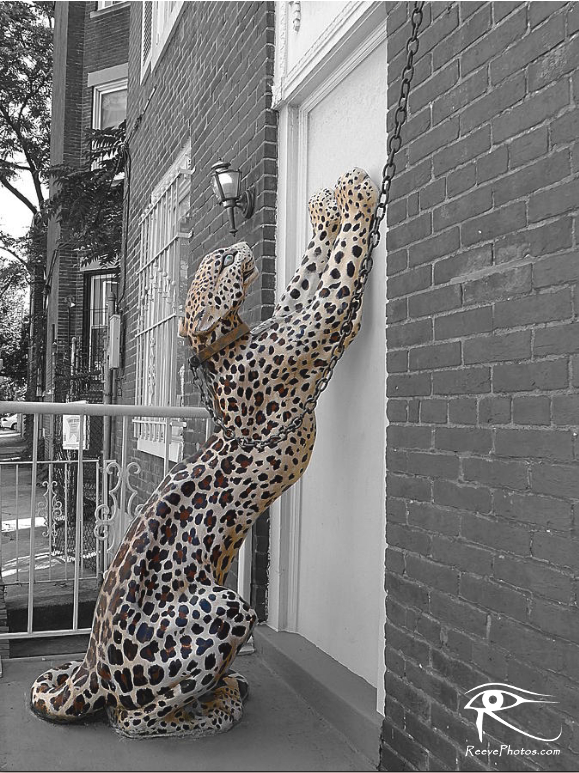
It’s amazing what you can find in the most normal of settings, and unexpectedly. All you have to do is keep your eyes open and actually look at your surroundings. For example, Philadelphia seems to be full of surprises such as this wonderful sculpture of a leopard on South 20th Street and Manning Street near Rittenhouse Square. One story has it that it the building which it is attempting to get into used to be a lingerie store and that this was used as marketing. The store has long gone but the leopard remains.
The town of Harwich, situated on the mouth of the the Rivers Stour and Orwell has been an important port for centuries. The town’s name derives from the Old English here-wic, meaning “military settlement” and received its charter in 1238, although it is likely it was established long before this time.
The Royal Navy established a dockyard here in 1652 for around 60 years, and although there is no longer a navy presence here the port was important during World Wars and has been an important commercial port for “travel to the continent” for decades. There is a large area we used to simply refer to as “The War Department” as a kid which is filled with reinforced concrete bunkers, towers and gun emplacements and was a wonderful place to play as child. I recall stories being told of how the guns there shelled the German battleship Scharnhorst when it passed along the coast, although I cannot verify them.
There is also an older fort, simply called The Redoubt, that was built in 1809-10 to defend against Napoleon, which again emphasises the strategic position of the town over the centuries.
Harwich is also famous for being the birthplace of not only the Captain of Mayflower, Christopher Jones (c. 1570) but also the famous ship itself. The Mayflower, which went on to carry The Pilgrims to the New World, was likely built at Harwich and was certainly registered as being “of Harwich” in the 1609-11 Port Books.

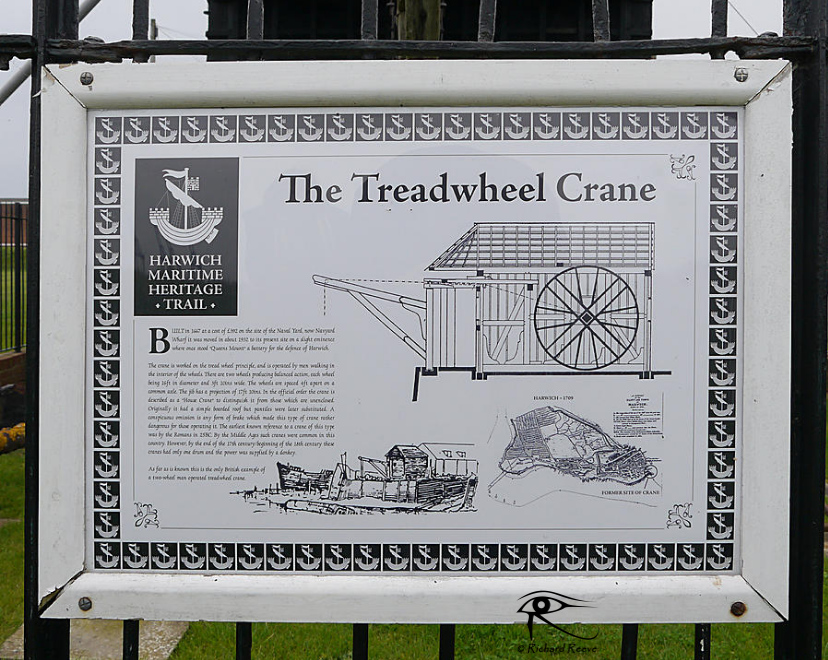
A walk along the docks and port of Harwich to Harwich Green also reveals an unusual building – the treadwheel crane. Using mechanics that was largely unchanged since the Roman period this is a human-powered lifting device was built in 1657 in the Naval Yard. It was moved to the Green in 1932, and is the only double wheel treadmill crane in Britain. It fascinated me as a child, and seems to stand as a sort of testament to past labour associated with the town.


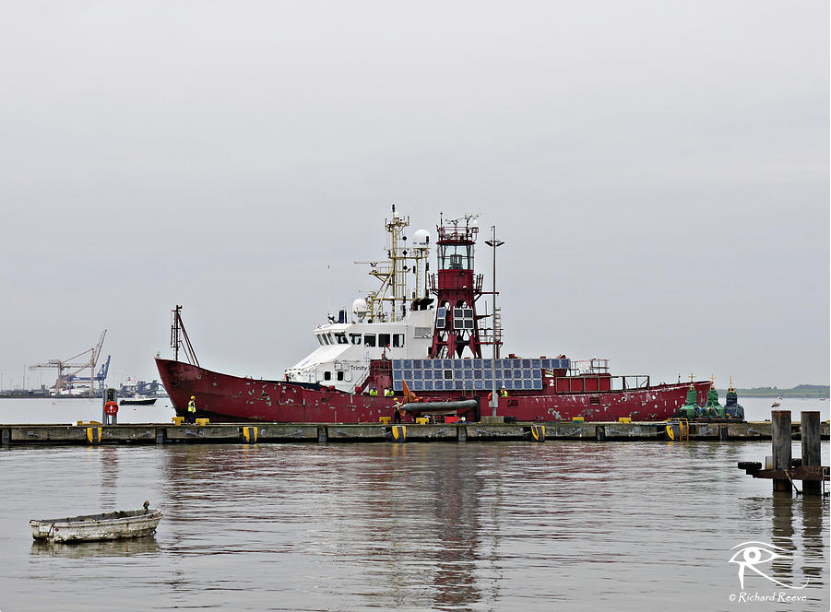
Trinity House, the official keeper of lighthouses and deep sea pilotage, has been an important part of the town for a long time with pilot boats guiding vessels into the ports and lightship and buoy maintenance being conducted here.
Unlike many coastal towns, Harwich never really became a seaside resort, maintaining its position as a “working town” and letting the neighboring town of Dovercourt take the tourists.
Nevertheless, it’s not all work, and there is fun to be had if you look for it…
Nestled on the Tendring peninsula on the east coast of England, and providing seaside entertainment for the masses for over 150 years, the town of Clacton may seem like any other British seaside town. Clacton came to prominence in 1871 when it was founded by Peter Bruff as a seaside resort, largely for Londoners to escape the city. He built the pier, which still stands today, and steamer was the main method of reaching the town until the road and rail system caught up.
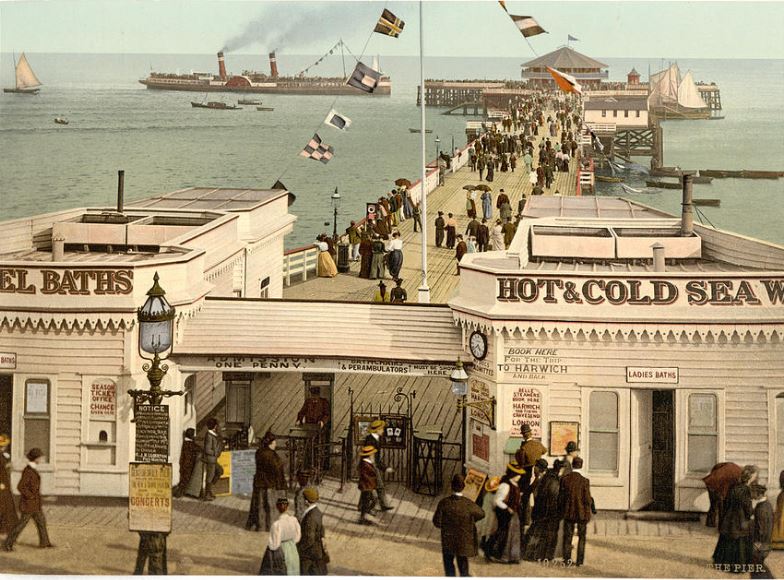

The heyday of the town was really the middle decades of the twentieth century when there was a Butlins Holiday Camp and many hotels and guest houses to entertain the day trippers and summer holiday makers. Then along came cheap flights to more exotic locations and, like so many British resorts, there was a significant downturn in the economy.
Even in the 21st century the town still has a significant number of visitors and people enjoying the sandy beaches, and going on the rides and other amusements on Peter Bruff’s original pier. When we were kids there were dolphins and orcas kept in the swimming pool on the pier, but thankfully that’s gone now.
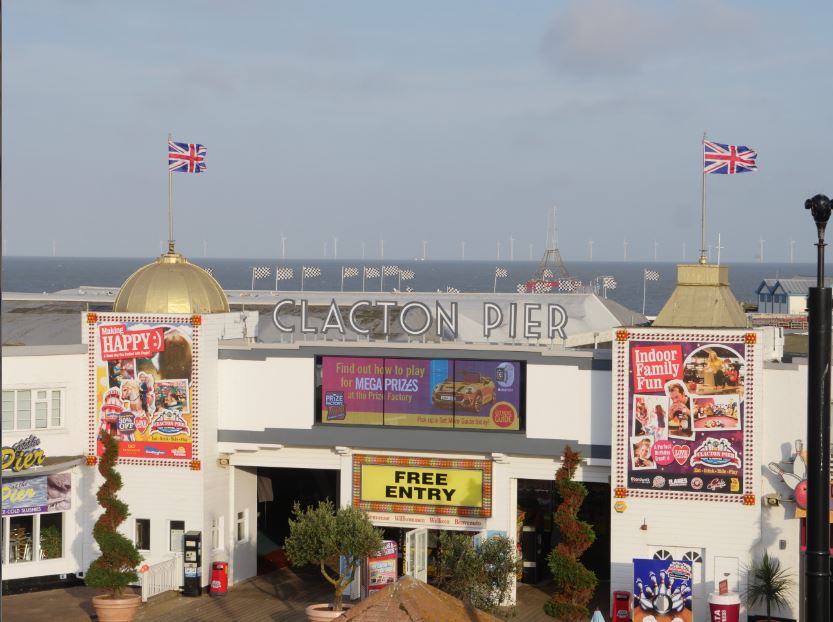

The landscape has also changed a bit with the offshore wind farm on Gunfleet Sands but all in all a pretty standard town that has had its ups and downs…

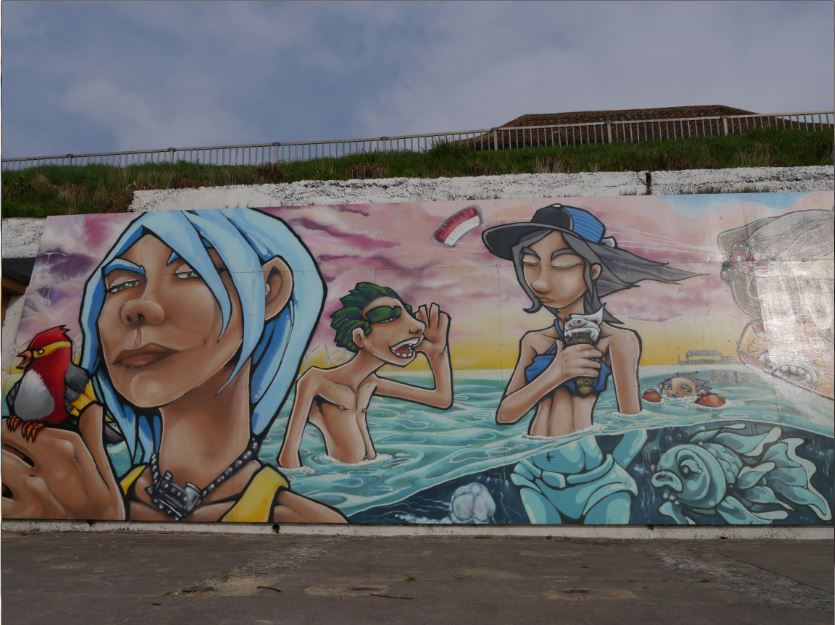
… Or is it?
Well, there are two things that are also uniquely interesting about this town, so let me explain.
Firstly, Clacton was the site of the first civilian casualties in World War II when Frederick and Dorothy Gill were killed by a Heinkel bomber that crashed into their house on May 1st, 1940. Little is made of this fact, although I clearly recall a plaque on a bench on nearby Skelmersdale Road detailing this tragedy when I was a teenager.
Secondly, although Clacton is primarily known as a typical Victorian seaside town, the area slightly inland at Great Clacton was inhabited by the Celts and there is some evidence of Roman involvement too at the coast. The most amazing fact though is that during the paleolithic period, the area was used for flint mining and tool manufacture. And in 1911 there was uncovered the “Clacton Spear” a wooden yew spear which, at 420,000 years old is the oldest known wooden tool created by man. It is, in fact, even older than Homo sapiens and was carved by our pre-ancestors Homo erectus. An entire period of human development, Clactonian, was named after the town and describes the fascinating industry of flint working and tool making.

How Quintessentially British!
Stuff that interests Mr Reid, a physicist and teacher
Sharing Great Blog Posts
Travelling the overcast isles
Inspiration for meeting life's challenges.
a resource for moving poetry
Welcome to my world.
Mind over matter
Musings on a mad world
Travel. Climbing. Characters. True stories, well told.
Adventuring the globe whilst based in the beautiful PNW, with a focus on fitness & adventure travel, conservation and a healthy balanced lifestyle. All with my beautiful partner in crime, Stephanie!
Games, Illustrations and Short Stories
Success By Design
Never get lost in the Sauce
Photo Book Store
Happy Eating
Cooking, gardening, traveling and photographing around the globe
storytelling the world
Perspectives on Lifelong Learning, Education, & The Arts

 searching4theshot