Lucy the Elephant

Billed variously as “the world’s largest elephant” and optimistically as “the largest zoomorphic architecture in the world” (hmm, if you’ve never heard of the Sphinx, or the Kakadu Crocodile Inn, perhaps?), Lucy the Elephant stands facing the Atlantic Ocean at Margate, New Jersey.

This wonderful old wooden structure, sheathed in tin sheeting, was built in 1881 by James V. Lafferty and used as a tourist novelty and to show the local real estate to prospective buyers for an ever-expanding Atlantic City in the late 19th century.  The six-storey building was originally called the Elephant Bazaar and was topped with a howdah to afford views of the area.  It formed part of a larger complex including Turkish baths as can be seen from this restored PD image, taken in the 1890s:

LucyElephant

The building picked up the name “Lucy the Elephant” in 1902 after it had been sold and was used for many purposes over the following decades.  By 1969 Lucy was in a poor state and was to be demolished, but a group of local enthusiasts banded together and saved the structure, moved her about 100 yards and repaired her  internally as well as providing a new  exterior “skin”.

She was subsequently designated a National Historic Landmark (amazing what difference a few years makes!) and is now maintained by the Save Lucy Committee who look after her every need!

I confess to never having heard of this wonderful piece of eccentric history until a few months ago, and I plan to visit her at some point in the near future and update this post with a few more contemporary images.  Stay tuned!

~Richard


6 sentence story – Retirees

The friends of the wild-haired youth were grinning at him as his high score, which had remained unbeaten all summer, was exceeded by both drivers.

“You’re down to third place!” squealed his annoying younger brother who he was forced to tolerate as a member of his gang under parental duress.

He clipped him round the ear and snarled, “Don’t be cheeky, Jack!”

Turning from the controls, to look him straight in the eyes, the old man softly growled: “You should treat your little brother with more kindness, lad.”

Something in the old man’s scarred face and tone filled him with an odd mixture of shame and fear, and quietened the crowd too.

“Yessir, I will,” he whimpered sheepishly, as he reflexively bowed his head.

160222_Oldies

~Richard


Camera Obscura in San Francisco

Just under a decade ago we moved to the west coast of the US and lived near San Francisco. Being new to the area we wanted to see as much of the area as possible and one sunny day, when checking out the ruins of the Sutro Baths and nearby Cliff House, we stumbled across this wonderful camera obscura on the cliff edge:

160221_CameraObscura

This camera obscura (literally “dark room”) uses a mirror in the pointed roof of the building to reflect light down through a lens onto a 6 ft (2m) diameter parabolic horizontal viewing table which gives a more even focus across the surface, magnifying the image 7-fold. What makes this one even more interesting is that the mirror rotates a full circle every 6 minutes giving a full 360° view of the area.

This wonderful building was built in the late 1940s as part of the Playland amusement park and was only placed on the National Register of Historic Places in 2001 after several threats of demolition following the closure and redevelopment of Playland in the 1970s.

The images of Seal Rock and the surrounding area were amazing, especially when considering this is such relatively simple technology, first described in the writings of the Chinese philosopher Mozi in the 4th century BCE.

Even the children were impressed back then, and that takes a lot to achieve these days!

~Richard


52 Week Challenge: Week 8

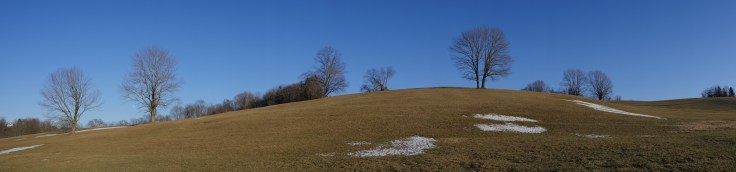
Week 8: Landscape: Wide Angle/Panorama – This is a great opportunity to explore panorama stitching and create a wide sweeping landscape.

Today was unseasonably warm, rising to 61°F (16°C) in the afternoon, so I took the opportunity after my Saturday taxi driving for the entire family over several hours to visit a local nature preserve while there was still some sunlight left and before the next round of vehicular collections was due.

I know the experts all tell us to use a tripod for panorama shots but, to be honest, I was in a bit of a rush, and I know I have pretty steady hands,so I initially tried using the in-camera panorama mode of my Panasonic GX8 to produce this quick image:

P1020271

For everyday use I think it does a good job. The camera uses rapid fire mode and you simply pan it left to right. The only downside is that it produces an image only 1920px tall, so it’s a bit limited for printing.

So, over to the manual approach and the use of stitching software, as requested in this week’s challenge. I have used the free  Hugin image stitcher before which is very capable and allow for a lot of fine tuning. However, this time I used the much more intuitive (and free) Microsoft Image Composite Editor (ICE).

So the process is to take a series of shots when panning, ensuring that at least 30% of the image overlaps between frames. This gives the software a lot of ability to match elements in the images and so map them properly. By using the camera vertically I was able to get a panorama 5002px in height and 17695px wide. Big enough to do a lot with! The reason is wasn’t full sensor height was because I hand held and wasn’t perfect in holding it level throughout the series, so ICE had to crop it to get a straight edge. It’s all easy to do though.

I made several composites but in the end I chose this one, simply because I liked the texture of the corn (maize) field in the foreground:

P1020286_stitchEDIT

~Richard

#dogwood52 #dogwoodweek8

In the Mind’s Eye – Pareidolia

This morning I saw the face of Ted Cruz in my toast, or was it Donald Trump, or maybe Donald Duck? It doesn’t matter really as the point of today’s wittering is to discuss the familiar concept, but perhaps unfamiliar term, pareidolia.

Scarcely a day goes by without someone posting on social media that they have seen the face of the Lord (or rather that of Mel Gibson, Robert Powell, or a Renaissance depiction thereof, since no contemporary sketch of Jesus actually exists) in a whole host of everyday objects from avocados to zucchinis. Similarly, when we were kids, and perhaps even now, we’d look up at the clouds and recognize an odd shape (other than a sheep!)

So, what is this all about then?

Pareidolia (/pærᵻˈdoʊliə/ parr-i-doh-lee-ə) is the condition where the human brain looks at an object and also perceives a familiar pattern in that object that simply isn’t there (such as a face). It seems to be an innate characteristic of human beings, probably because we not only have well developed visual processing but, more importantly, because of our cognitive wiring, so to speak. It seems to hinge on us being hard-wired for rapid pattern recognition so that we have a shortcut to enable our brains to quickly identify familiar objects for binary decision making (safe or unsafe, friend or foe, etc.). Pareidolia is when this falls apart slightly and perhaps we miss the visual cues slightly. However, as the visual signal is processed so quickly against our internal reference we cannot help but “see” the object that isn’t really there..

There are many examples of this but perhaps the most (in)famous forced use of the condition is the Rorschach inkblot test which attempts to evoke this state and determine an individual’s mental state based on what the “average” person would see.

However, it also can be used for some interesting artistic effects too.

For example, I was walking in our garden one day and saw the poppy below which reminded me of an angel simply because of the way the petals fell.

160219_PoppyAngel

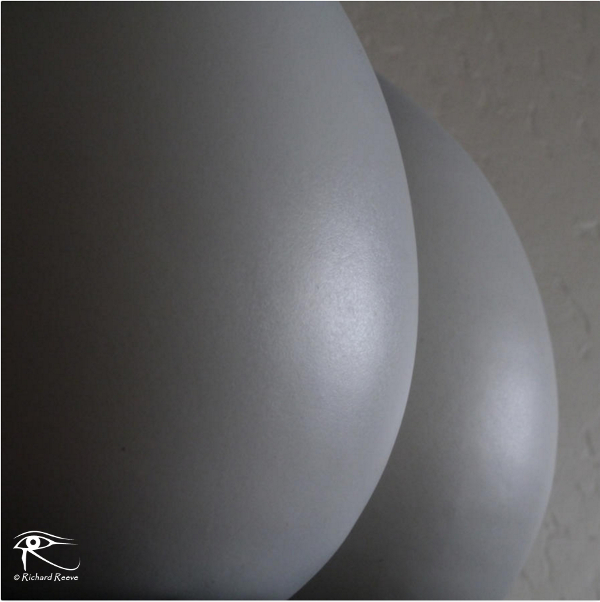
Or, by careful choice of camera angle, I was able to evoke another visual interpretation of these two gray vases on a shelf 😉

160219_Perception1
One thing is for certain, it’s a phenomenon that isn’t going to go away, so why not have some fun and  incorporate it in your next artistic endeavor?

~Richard

6 sentence story – Death Supreme

“He was an extraordinarily intelligent man,” they say, “someone who worked tirelessly to protect the people from change.” To me though, he lacked pragmatism. His bright mind, molded by his god-view, was distorted to defend a status quo established centuries before. Unyielding and narrow minded, his decisions would impact millions for a generation and beyond. I think he enjoyed in the notoriety. Personally, I didn’t like the man’s demeanor.

160218_Scalia

~Richard

Fighting Legends

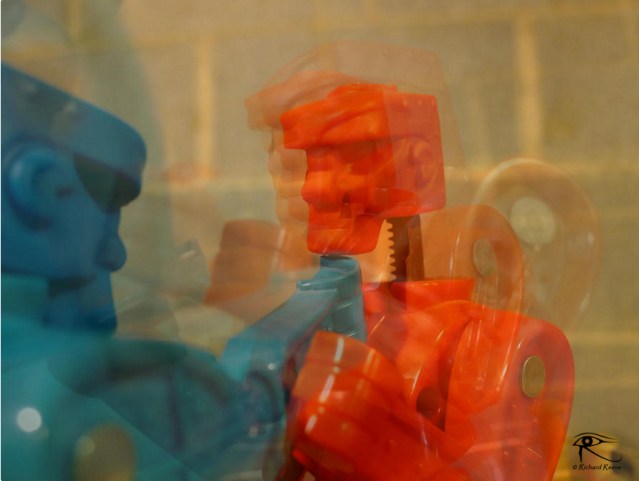
Last night’s fight was a brutal battle of strength and wits. Although it was fairly matched for the first eight rounds the Blue Bomber was able to drive home a devastating blow to the Red Rocker, the reigning champion, midway through the 9th. Our reporter was able to capture the precise moment from his ringside seat and have this spectacular action shot here for The Evening News Sports Page within minutes…

160217_Boxers

~Richard

Quintessentially British? – The Mini

There was a time when I was younger, back in the UK, that just about everyone had owned a mini at some point. They were everywhere. A small car designed to fit in a 10ft x 4ft x 4ft space, carry 4 people at highway speeds and sip fuel.

Following his success with the iconic Morris Minor, Sir Alec Issigonis’ design was an instant hit in 1959 and remained in production, largely unchanged until 2000. Over 5.3 million units were made and it became a British icon alongside Big Ben and the Union Jack.

The Mini is one of the most iconic images of post-war Britain. It symbolizes the swinging 60’s: Carnaby Street, youth culture, rock & roll, sexual liberation, and freedom for the common people.

What could be more British than that?

Well, it must not be forgotten that it was designed by a Greek refugee, Alexander “Alec” Issigonis, later knighted for his engineering/design work. Alec fled to Britain with his family from Smryna in Greece (now called Izmir in Turkey) during the Greco-Turkish war of 1919-1922.

160216_Mini

My point of designing this simple art work was to bring to the fore the concept that we are all one people and you cannot predict who will do what for whom. In these days of vitriolic rhetoric aimed at the sea of refugees fleeing the Middle East, this is perhaps something we should reflect upon…

~Richard


52 week challenge: week 7

Week 7: Portrait: Faceless – Tell someone’s story without showing their face.

Ice Queen No More

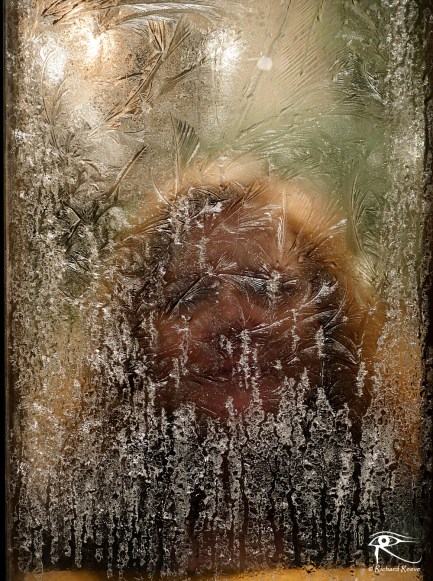
The night was bitterly cold. So cold, in fact, that it was too painful for her to draw a deep breath. She waited for him inside the building and tried to peer out through the frost covered window. At last she spied him hurrying towards the door. She smiled. Soon they would both be warm.

160215_IceQueen

~Richard

#dogwood52 #dogwoodweek7

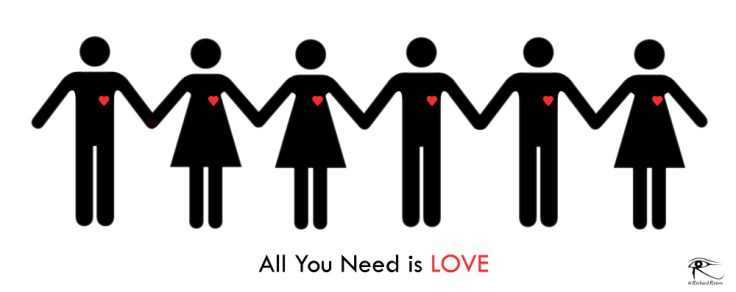
All You Need is Love


Yes, today is the day to celebrate lurve… or so we are told. Quite why we cannot share love for the rest of the year is beyond me, but I guess this day at least provides a focal point for this emotion. In the “old” days, when I was a youth, Valentine’s Day was a day when sweethearts connected with cards, flowers, chocolates, and dinner. These days it appears that valentine greetings are appropriate for any member of your extended family, friends and even pets. This year we were even asked by our school district to send valentine wishes to our kids’ teachers, in a desperate attempt to raise funds. Personally, I found that request fairly disturbing, but then perhaps I am too much of a traditionalist – the lyrics to the Police’s classic, “Don’t stand so close to me” seemed to instantly fly into my head when I read the email.

So how did we get to today? Valentine’s Day really first emerged in the writings of one of the first authors to compose written works in English, Geoffrey Chaucer, best known for his wonderful collection, The Canterbury Tales, way back in the 14th Century. In another book, The Parlement of Foules, he celebrated the anniversary of the engagement of King Richard II to Anne of Bohemia when he penned:

For this was on seynt Volantynys day

Whan euery bryd comyth there to chese his make.    

The meaning of which roughly translates to “A gift was given on Valentine’s Day, when every bird chooses his mate”

However, given that mid February in England is way too early for birds to be mating it seems unlikely that he is referring to today’s date.  

Over the following centuries there were many other links of St Valentine to the expression of love, but it seems to have been the early 19th century where this exploded into the sending of amorous missives as handwritten notes and then the mass-produced cards that we know today. For some reason this activity struck a collective chord (perhaps even plucked a heart string) in the populace and today we spend an estimated $19 Billion (yep, you read that correctly) celebrating the day in the US alone. Is it no wonder that Hallmark, jewelers and even car manufacturers push this date down our throats almost as soon as the xmas trees are cleared away?

Anyhow, not wishing to rain on anyone’s parade, to use the modern vernacular: May you all have a very Happy Valentine’s Day wherever you are, whatever you do, and whomever you are spending it with, and that’s especially if you are on your own.

160214_LoveIsAllYouNeed

~Richard

Blog at WordPress.com.

Up ↑

MrReid.org

Stuff that interests Mr Reid, a physicist and teacher

From 1 Blogger 2 Another

Sharing Great Blog Posts

Journeys Through Pre-World War 3 Britain

Travelling the overcast isles

cancer killing recipe

Inspiration for meeting life's challenges.

the poet's billow

a resource for moving poetry

Lordess

Welcome to my world.

Rustic Rumination

Mind over matter

Stephen Liddell

Musings on a mad world

thisisyouth

Travel. Climbing. Characters. True stories, well told.

OPOD blog

Adventuring the globe whilst based in the beautiful PNW, with a focus on fitness & adventure travel, conservation and a healthy balanced lifestyle. All with my beautiful partner in crime, Stephanie!

Fictionspawn

Games, Illustrations and Short Stories

2Richards, Inc.

Success By Design

Sauce Box

Never get lost in the Sauce

Jim Kayalar Photography

Photo Book Store

DADDYSCUISINE

Happy Eating

in cahoots with muddy boots

Cooking, gardening, traveling and photographing around the globe

P e d r o L

storytelling the world

The New Renaissance Mindset

Perspectives on Lifelong Learning, Education, & The Arts