
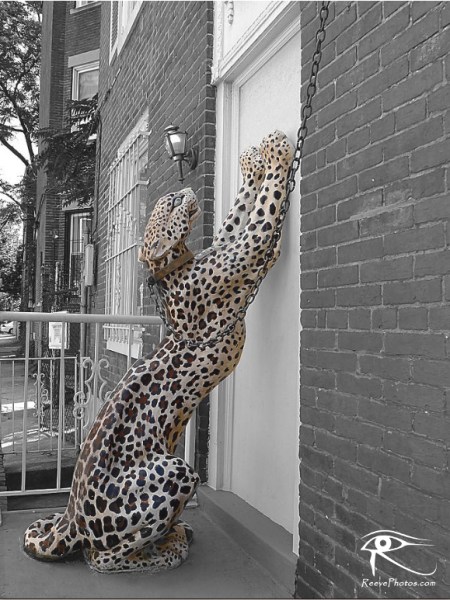
It’s amazing what you can find in the most normal of settings, and unexpectedly. All you have to do is keep your eyes open and actually look at your surroundings. For example, Philadelphia seems to be full of surprises such as this wonderful sculpture of a leopard on South 20th Street and Manning Street near Rittenhouse Square. One story has it that it the building which it is attempting to get into used to be a lingerie store and that this was used as marketing. The store has long gone but the leopard remains.
Beautiful Britain – Clacton-on-Sea
Nestled on the Tendring peninsula on the east coast of England, and providing seaside entertainment for the masses for over 150 years, the town of Clacton may seem like any other British seaside town. Clacton came to prominence in 1871 when it was founded by Peter Bruff as a seaside resort, largely for Londoners to escape the city. He built the pier, which still stands today, and steamer was the main method of reaching the town until the road and rail system caught up.


The heyday of the town was really the middle decades of the twentieth century when there was a Butlins Holiday Camp and many hotels and guest houses to entertain the day trippers and summer holiday makers. Then along came cheap flights to more exotic locations and, like so many British resorts, there was a significant downturn in the economy.
Even in the 21st century the town still has a significant number of visitors and people enjoying the sandy beaches, and going on the rides and other amusements on Peter Bruff’s original pier. When we were kids there were dolphins and orcas kept in the swimming pool on the pier, but thankfully that’s gone now.
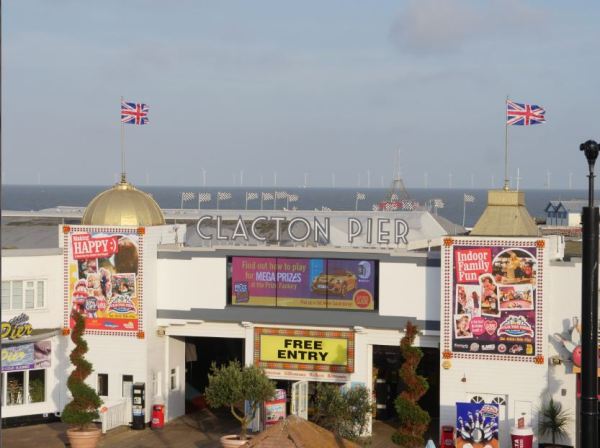

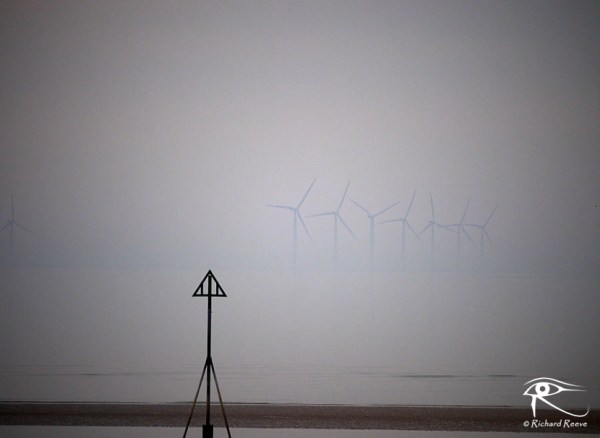
The landscape has also changed a bit with the offshore wind farm on Gunfleet Sands but all in all a pretty standard town that has had its ups and downs…
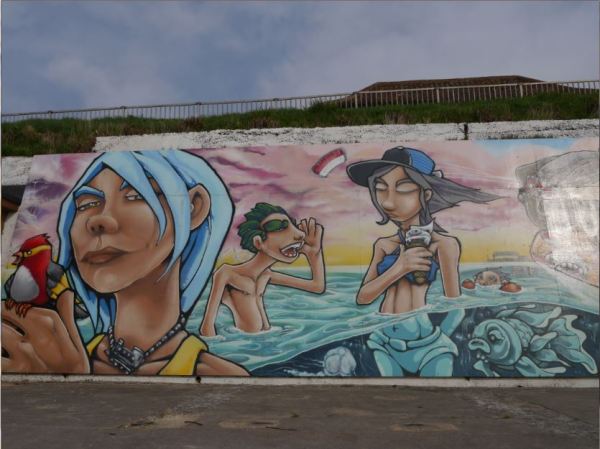
… Or is it?
Well, there are two things that are also uniquely interesting about this town, so let me explain.
Firstly, Clacton was the site of the first civilian casualties in World War II when Frederick and Dorothy Gill were killed by a Heinkel bomber that crashed into their house on May 1st, 1940. Little is made of this fact, although I clearly recall a plaque on a bench on nearby Skelmersdale Road detailing this tragedy when I was a teenager.
Secondly, although Clacton is primarily known as a typical Victorian seaside town, the area slightly inland at Great Clacton was inhabited by the Celts and there is some evidence of Roman involvement too at the coast. The most amazing fact though is that during the paleolithic period, the area was used for flint mining and tool manufacture. And in 1911 there was uncovered the “Clacton Spear” a wooden yew spear which, at 420,000 years old is the oldest known wooden tool created by man. It is, in fact, even older than Homo sapiens and was carved by our pre-ancestors Homo erectus. An entire period of human development, Clactonian, was named after the town and describes the fascinating industry of flint working and tool making.

How Quintessentially British!
Beautiful Britain – Southwick
It’s been over 7 years since we last visited the UK as a family and I thought our recent visit would be a great opportunity to write something about good old Blighty for a few posts. It will motivate me to process my photographs and also is relevant to promoting the art group I run at Quintessentially British, which now contains over 11,000 images of “Britishness” by more than 700 artists. Ironically, I haven’t posted that many images of my own to the group since I set it up 5 years ago, so this trip was an opportunity to get some more images to post!
So, I’ll start with our first port of call – literally – Southwick, in West Sussex.
Southwick is a small coastal town situated on the River Adur on the south coast of England. There have been settlements here from at least the Roman times and the town is first recorded in the Domesday Book (1085 AD). Like many nearby towns, it was the extension of the railway lines in the 19th century which really caused the town to expand becoming a popular place for tourists to visit and take the sea air.
Although largely eclipsed by Shoreham-by-Sea to the west and Brighton & Hove to the east, Southwick still has a thriving commercial port (called Shoreham Port, even though it’s really in Southwick and Fishersgate), serving both commercial and navy vessels in docks on the River Adur.

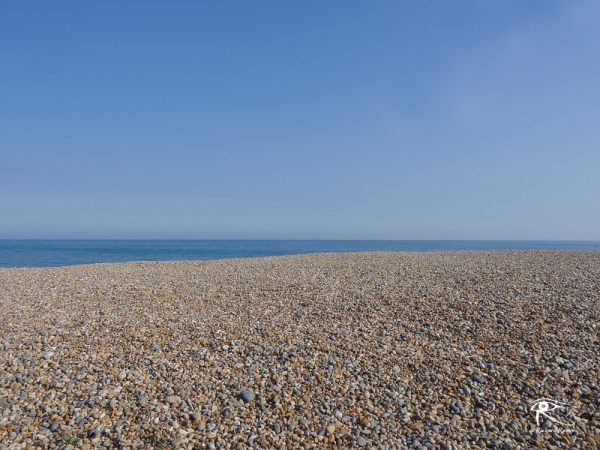
There is a nice village green with traditional pub on the edge, railway station and a couple of new windmills placed adjacent to the pebble beach, almost as an advance guard to the huge wind farm that is being developed off the coast in the distance.
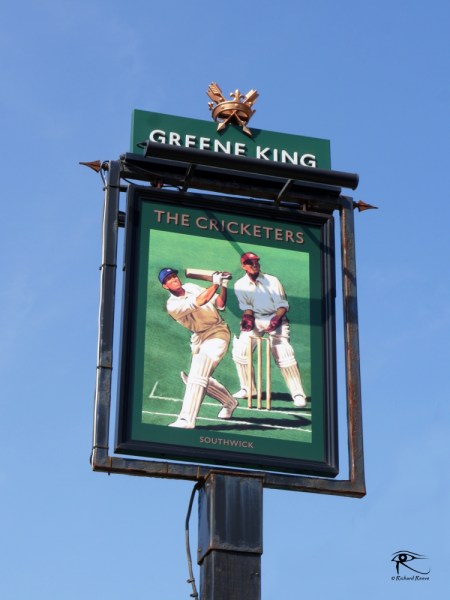

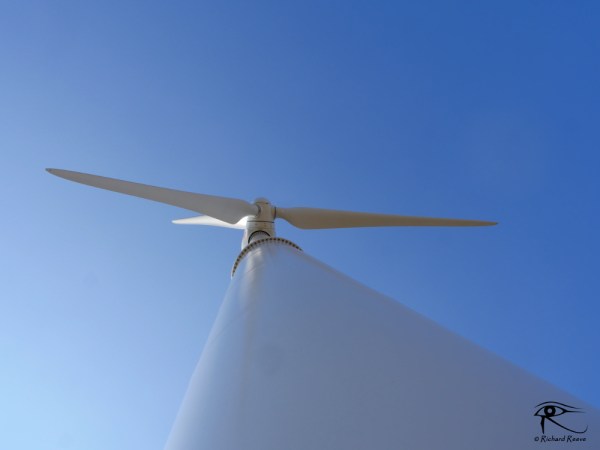
A bit of something for everyone, perhaps? Certainly a nice place to sit in the sun and enjoy a “99” (soft ice-cream cone with a chocolate flake).
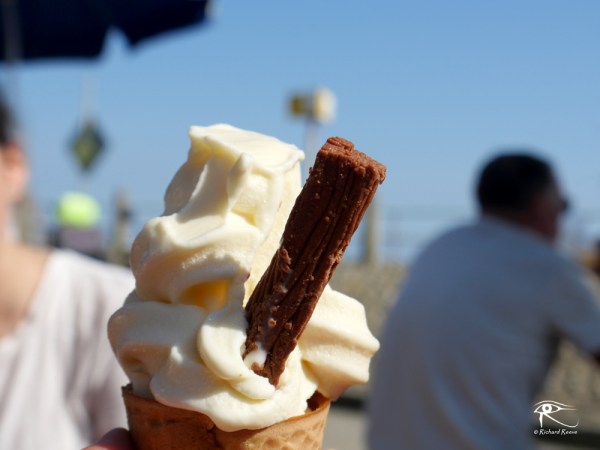
How Quintessentially British!
So nice to go traveling
Wow, it has been over a month since I posted a blog! I am appalled with this failure of what started out as a rebooted daily discipline, back in Jan 2016, but there’s been a good reason for this.
In mid-June I was fortunate enough to have taken an extended family vacation back to England and include a brief 2-night sojourn to Paris too. I had grand plans of writing blog entries and posting images as we traveled but, to be honest, I was too busy enjoying myself “in the moment,” as they say these days.
And that’s how it should be.
I will play a bit of catch up over the next few weeks and months as I process the hundreds of photographs I did take that will jog my memory. And I’ll start off with the first three that I worked on yesterday evening, from Brighton, Paris and Amesbury.


The time went very quickly and we saw family, several friends, and many of our old stomping grounds and tourist attractions. We were even fortunate with the notoriously unpredictable British weather.
It would have been nice to have stayed longer and spend more time with even more friends and family but, alas, time caught up with us and it was with mixed emotions that we returned to our home in Pennsylvania. After a day or so I admit that it’s good to be home and to appreciate the life that we have here.
That’s the philosophical part of traveling, perhaps!
Easter Egg Redux
I have had such a busy last few weeks that I totally forgot to post this blog entry that should have been uploaded on Easter Sunday! Back in the UK it’s a tradition to give chocolate Easter Eggs as gifts on Easter Sunday. Over here in the USA they have been very hard to come by and only recently have I started to see a few more of these for sale. As an aside, I find this odd, as it’s unusual for confectionery manufacturers to miss a new marketing opportunity, but there you go.
Last year I managed to get a mold and make a chocolate egg for my wife, as detailed here. This year I thought I’d do something a little different so I used the same mold but instead made a ceramic two part egg and glazed it in white with blue and yellow highlights, in the style of a faux Faberge Egg. As a finishing touch I filled with some of her favorite chocolates, Wilbur Buds, from Lititz, PA.


Help! There are too many themes…
I cannot be the only blogger here who is having difficulty deciding which WordPress theme best suits my blog. They say that choice is good, but, to be honest, there are simply too many to review and pick from.

I have spent quite some time going through myriad styles that are offered me, some look good, others just don’t work the way I want them to. It is all so time consuming and tedious after a while. I would like to get a great theme and just stick with it – I am told having a “recognizable identity” is the thing to do on social media if I am to make anything useful from it. Given the rambling nature of my this blog, then at least I should try to have a consistent ”feel” to the page. Underlying all this though remains the point that this was really set up to try to promote my art for sale, so I do need to make sure that there some good images placed in prominent positions on the posts, without compromising page load speed.
So, that being said, you are now looking at the current iteration as of 24-Apr-2017. I would appreciate any feedback on the current blog layout (called Baskerville 2) – is it appealing or appalling? Is easy to use, or a pain to stroll though? Is it fast enough or does it drag when loading?
Please let me know.
SATOR Square Magic
It has been a few days since my last post, mainly due to the beautiful weather we are having and the fact that I have spent so much time outside in the garden planting, weeding and fixing things. By the time I get inside and grab a beer I really haven’t had the mental resilience to sit down at the keyboard and compose anything.
Today, though, I finished my self-imposed “chores” early and managed to get some time to create a new art piece. It is based on the SATOR square and follows on from several ceramic works I made earlier in the year. I thought I had written about those pieces earlier, but it would appear that I had not.
So, I’ll start off with a brief history of the SATOR square (aka ROTAS square). This is a unique five-line text in Latin and is the ONLY palindromic sentence that can be read in any direction: left to right,right to left, down to up, up to down, and even in serpentine fashion line by line, and still have the same meaning. It is a feature of Latin that allows this word order to be acceptable.

Now, the sentence itself is a bit trite and has been assigned the meaning “The farmer, Arepo, uses a plough for his work” but the point is that it is a meaningful statement. Now to the he fun part. Back in the olden days it was thought that the devil could be confounded by palindromes since he would be unable to corrupt them by saying them backwards. The SATOR square, being palindromic in so many ways, was thought to be very strong magic and was often used as a protective symbol.

And couldn’t we all do with a little protective magic these days?
Decadence and Elegance
I have been re-listening to the Kraftwerk album, Trans Europe Express, that I first heard back in the late 70’s and was inspired by the lyrics “elegance and decadence” from the track Europa Endloss (Europe Endless) to create a variation of one of my art photographs.
Ironically though it was the much more widely known track Hotel California, by The Eagles which ended up directing how I modified the image. It’s funny how things turn out.

One Way Forward
The rise of the self-drive vehicle (SDV) is inevitable and I, for one, and quite happy with this. Having spent the last couple of weeks commuting back and forth along the I-76 beside the Schuylkill River in and out of Philadelphia I am quite sick to death of the pointlessly aggressive driving habits of the average driver. The sooner we have computer controlled cars that communicate with each other the better. However, in conversations over the last few months, my own view to be quite the opposite of just about everyone I know. I seem to be the only one (at least in my circle) who sees that a networked set of vehicles will reduce traffic congestion, reduce environmental impact, be more efficient in getting us where we want to go, reduce stress and, in the end, be safer.
I also think we aren’t thinking big enough. For example, this technology could, if we have the foresight, result in redesigned vehicles with, say, rearward facing seats for safety. It could even finally dispense with the need for personally owned vehicles.
Imagine the efficiency on a national level if whenever we needed a vehicle we just called it up from the local “hive” of automatic cars, trucks, and minivans and our specialized vehicle came along in a few minutes, took us and our passengers and cargo to where we wanted to go and then went back to the collection of available vehicles for immediate re-use. There would be fewer vehicles on the road and even fewer parked up rusting unused for 22+ hours a day on driveways and full parking lots. That has to be a better world for everyone.
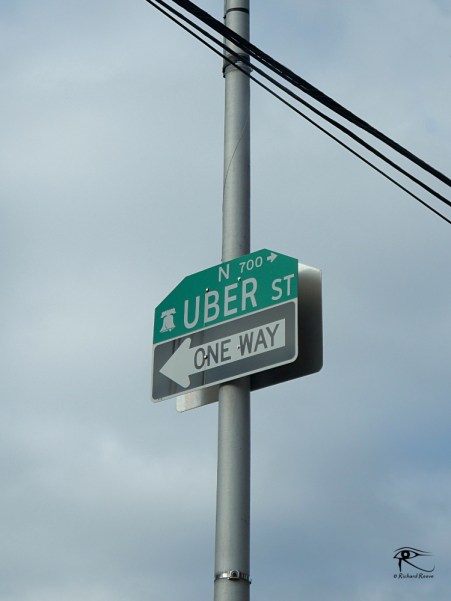
My vision is summed up by this wonderful Philly street sign I saw earlier in the week – we have one way to go logically – a sort of “super Uber.”
But, unlike many drivers I have seen just this week, will we adhere to the road sign…?
When does an artwork cease to be original?
I was at the Philadelphia Museum of Art (PMA) yesterday for several hours and as I walked in I saw that three artists/restorers were at work retouching/restoring the huge canvas on the ground floor by Marc Chagall, “A Wheatfield on a Summer’s Afternoon.” Later, as I was looking at the works of Marcel Duchamp I noticed on the wall plaque that this famous “Fountain” was actually a 1950 replica of the 1917 original and that, similarly, his 1919 work “50cc of Paris Air” had been “broken and later restored.”


As I was contemplating these pieces the thought came to me – when does an artwork cease to be original? Using these three examples I can understand that artworks deteriorate and may need to be restored, and I fully see the requirement to “preserve” Chagall’s work by retouching, but at what point does it become the restorers work? The original brushstrokes are not preserved. Are the pigments used exactly the same composition and color as the original – in every stroke?
This concept becomes even more problematic in the case of the Duchamp examples.
When “50cc of Paris Air” was repaired the glass vial may well look the same (well, sort of – it’s hardly an invisible mend), but was it repaired in Paris, in the same place that Duchamp created it? And even if so, it certainly would not contain the same air from 1919 which was no doubt differently polluted than more modern atmosphere.
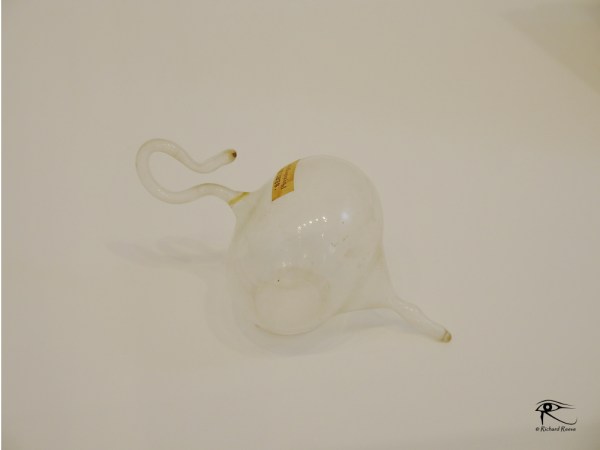
Finally, in the case of making a replica piece, what are we to make of this? Is it original art or is it not? I assume that as long as Marcel Duchamp was involved in the process then it is still original, albeit derivative, but if not then is it simply a “worthless copy” created by someone else?
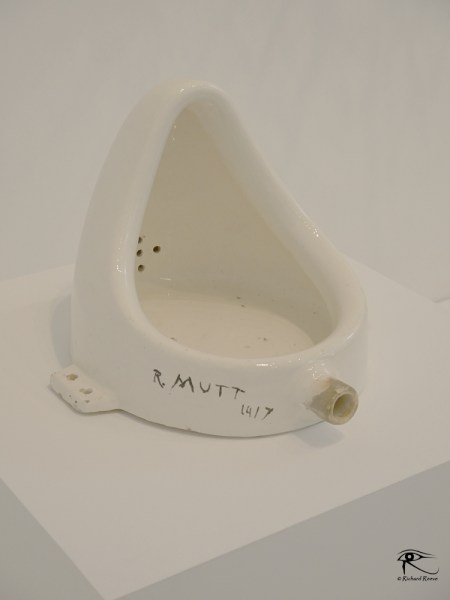
And what of the digital world? Almost all my 2-D art is created electronically and exists in multiple backup copies as binary data stored on my laptop and other drives. Where is the original art in this case?
So, a lot of questions – does anyone have any thoughts on this?
 searching4theshot