Lasagna’s Law, Buses and Photography

In 1970, American physician and clinical pharmacologist, Louis Lasagna, described the phenomenon that is well known to those of us who work in the field of clinical research: “The incidence of patient availability sharply decreases when a clinical trial begins and returns to its original level as soon as the trial is completed.”  In other words, when discussing with physicians to see if a clinical study with a new drug or device is feasible, it’s amazing how many suitable patients “disappear” from the face of the earth as soon a study starts, thus making the study slower, more expensive, and overall more difficult than had been “promised.”  Over the years, this became known as “Lasagna’s Law (of patient recruitment)

Similar phenomena, however, are not isolated to research.  For example, users of public transport (at least in Britain) are familiar with the oft-quoted idiom:  “you wait for a bus for a longer than you should have to and then three come along at once.” *

So what is going on here?

My conjecture is that much like the phenomenon of pareidolia, this is linked as much to human  perception as to anything based in reality: the physicians probably think they see more suitable patients than they do as they are concentrating on a particular set of criteria, but probably in a too generalized manner (if that makes sense).

I bring this up because in order to complete my week 12 photography challenge I finally settled upon the idea of photographing a yellow school bus, as I blogged yesterday. How many of these do we see every day? How often do I wait for the flashing red lights and pop out stop signs? I would have estimated at least a dozen a day for the first question and at least once a day for the second. But when I want to see them, what happens? I start to question my reasoning, that’s what!

This seemingly easy, self-inflicted assignment suddenly became a challenge. A man with camera pitted against fate. The buses all seemed to me to have left the streets or only appeared briefly when my camera wasn’t handy, sneaking behind other vehicles, billboards, road signs and nature. I decided that I don’t want to appear as some weird stalker, so I wasn’t prepared to hang around the school yard with a camera, so that left me with no option but to treat this like a pseudo-wildlife shoot.

I managed to snatch some shots from the parking lot at the local Wawa store, but for some reason I felt a bit like a private investigator digging up dirt – not a nice feeling. And I got glared at by one car driver as she drove into the lot.

160325_SchoolBus01

In the end, I changed the scope of my assignment. When driving to work that final morning (I like to keep to the weekly timing) I decided to visit the equivalent of the wildlife “watering hole” in the savanna, namely, the local bus lot, to capture these elusive beasts.  So,  at lunchtime I snatched 20 minutes to drive out to one which is nearby and to sheepishly ask the guy in charge if I could photograph some buses.  As it happens, there was no-one in what appeared to be the gate house so I just stood outside and clicked away.

Job done, at last!

So, what, if anything, is the lesson here? Well, although it ended well enough, albeit under pressure, I should probably think more about setting a realistic goal in the future. And to that end, I think I will finish with the old British Army adage of the 7Ps, which always holds true, in my experience, and should be well heeded by us all.

l leave you to look up, dear reader 😉

~ Richard

* As an aside, there does appear to be a totally different rationale for this one, though – it’s called “platooning” apparently.

52-week Challenge: week 12

WEEK 12: Artistic: Transportation – Our world is one defined by how we get around. Literal or interpretative, find inspiration in transportation.

I had too many ideas for this one; cars, trains, bicycles, buses, perhaps even an Amish carriage, if I were to travel west a few dozen miles.  I mean, how can so much choice be a problem, right?

Well, it can because the issue then becomes one of creative overload, at least in my case. Yes, I need to focus (pun intended) on what I actually want to achieve with this assignment.

So, a day or two to think and then here we go:

Idea 1: Panning cars traveling on the highway to give a blurred background. It didn’t happen.

Idea 2: An arty shot of an AMTRAK train or the SEPTA regional railway, maybe in black and white. It didn’t happen.  

Idea 3: A bustling street scene in the center of town, or a commuter ride showing traffic congestion. It didn’t happen.

Idea 4: Cyclists – there’s always several of these guys on the back roads at the weekend. That one didn’t even start!

Grr, what’s going on?

Then, on the Monday morning drive to work, an epiphany: the American school bus – it’s so obvious!

As an immigrant from England the yellow school bus is as much an internationally known icon of US society as the red double-decker bus is quintessentially British. It instantly identifies any scene as being American. I would venture more so even than a slice of mom’s apple pie cooling on the window sill…

… and I know where they park a lot of them 🙂

160324-SchoolBusMirror

Oh, and there’s a backstory to this as well – I will share that on tomorrow’s post

~Richard

Radio news, served cold

Hardened as we are becoming to the world events, I was still shocked by this morning’s news from Brussels. As I listened to the reports whilst traveling to work, the insanity of one segue struck a chord such that I had to  compose this to escape my head…


~  Radio news, served cold  ~


The morning news broadcasts the horror (again).

Of violent deaths of innocent people,

everyday folk, living everyday lives.

Chatting, noisy, smiling people;

families and workers traveling free,

caught in a cacophony of catastrophe.


As deaths are tallied

and war-wounds examined

we hand over to our market desk,

where gold is up,

and airline stocks are falling.


I am sure heads will roll…


~Richard

A Poem – Lyrical Sunday

160320_Sunday

I remember Sunday morning

With Sunday morning silence

A Sunday, bloody Sunday

It’s Sunday, time is slow


They call her Sunday’s child

Has a Sunday smile for you

She’ll turn once more to Sunday’s clown

and cry behind the door


You can read it in the Sunday papers

Sunday driver with his hands off the wheel

Another unsuspecting Sunday afternoon

Live in dreams, Sunday girl


I’m easy like Sunday morning

And Sunday always comes too late

On Sunday, hated Sunday

The Sunday evening sun goes down…


* Each individual line is taken from a song. I am grateful to the original lyricists and performers.

~Richard

1/40 of a Picture

“A picture is worth a thousand words” is not, as oft thought, an ancient saying from a mystical eastern philosopher, but rather a construct of the advertising manager at Street Railways Advertising, Frederick R. Barnard.

In an advertisement in “Printer’s Ink” in December 1921 he used the phrase “One Look Is Worth a Thousand Words” with a fictional attribution to “a famous Japanese philosopher” to add gravitas to his copy which was, in the end, designed to sell photographic advertisements rather than to be particularly philosophical.

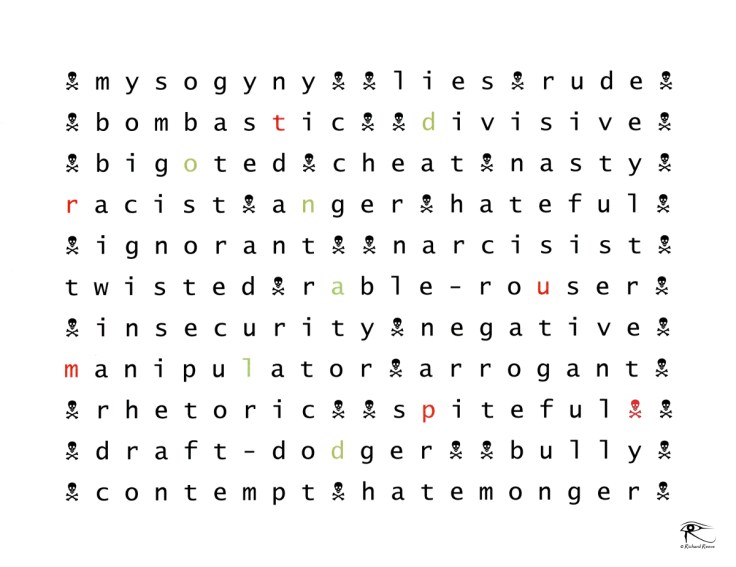
That being said, today I offer up perhaps one fortieth of my picture of the Republican front runner in the 2016 GOP presidential campaign:

160319_TrumpWords

~ Richard

St Patrick, Aesop, and the Donald

Yesterday was the big celebration all over the (western-influenced) world when millions of disparate people became “honorary Irish” in order to celebrate St Patrick’s Day, which really marks the Irish diaspora, especially the 5 million or so who emigrated to the United States. Although the migration started in the early 19th century it was during the Victorian era (from 1840) that it became almost a national  industry such that 40% of Irish-born people had emigrated from the Emerald Isle by 1890. Today around 36 million Americans – that’s more that 10% of the population – claim Irish as their primary ancestry* and hence we have the huge St Paddy’s Day parades in New York City, Philadelphia and many other towns and cities throughout the land. We even had a “St Patrick’s Day Potluck” at my place of work. All this largely to celebrate the huge benefits this massive influx of people from a single country have had on other nations (especially the USA), as well as a good excuse to gulp a few pints of Guinness.

So, it is with more than a touch of irony and bitterness that the day preceding this event I was sent a link to a Trump video where the polemic pouter, whose mother (née Mary Anne MacLeod) was a Scottish immigrant, reading  the Oscar Brown-penned song The Snake, that was made famous by Al Wilson in the late 60s, against a background of selective videos of violence.

This song is based on one of the famous fables of the Greek slave and storyteller, Aesop, specifically, The Farmer and the Viper, and is the source of the idiom “to nourish a viper in one’s bosom” (little used today).  It’s not difficult to see the claim he is making, albeit crudely.

The gist of the tale is that the farmer (or woman in the song) finds a viper that is injured and feeling compassion for the animal’s plight takes it home to heal it. Whilst ministering to its needs the snake bites him, delivering a fatal dose of venom. Dying, the farmer asks, “why did you kill me when I was helping you?” to which the viper replies dispassionately, “I’m a snake, what did you expect me to do?”

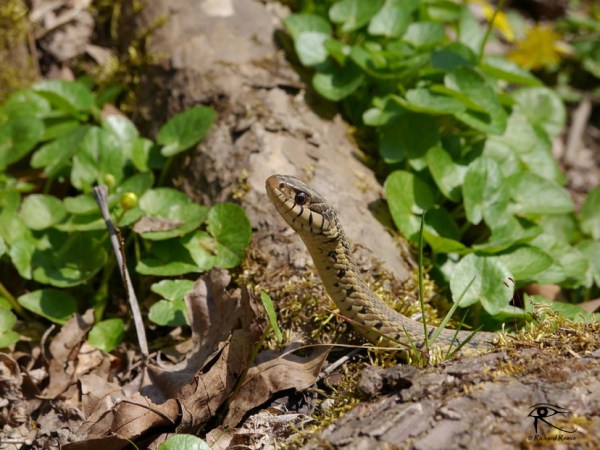
160318_Snake

Now, I’d like to turn this around somewhat and say that given the Donald’s past history of narcissism, deceit, misogyny, racism, vitriolic ranting, violence inciting, and general disregard for humanity as a whole …

“Who’s the snake?”

~Richard

* Although I am an immigrant, who enjoys a Guinness (or Murphy’s), I am not of Irish descent, as far as I know.

A Story – The Swaffham Pedlar

The old historic market town of Swaffham, in Norfolk, England was brought to fame a few years back as the fictional town of Market Shipborough in the British TV series Kingdom, starring Stephen Fry.

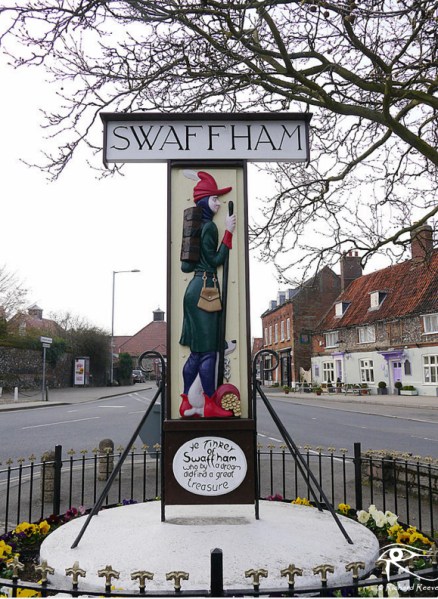
The locality has links back to Boudica, the queen of the Iceni, famed for leading the uprising against the Romans in AD 60-61 but the town celebrates a more recent (only 300 years old or so) and humble ancestor who has been depicted on the town sign for years.

The Pedlar of Swaffham makes an interesting tale and was first recounted in the Diary of Abraham de la Pryme in November, 1699:

Constant tradition says that there lived in former times, in Soffham,” alias Sopham, in Norfolk, a certain pedlar, who dreamed that if he went to London bridge, and stood there, he should hear very joyfull newse, which he at first sleighted, but afterwards, his dream being dubled and trebled upon him, he resolv’d to try the issue of it, and accordingly went to London, and stood on the ridge there two or three days, looking about him, but heard nothing that might yield him any comfort.

At last it happen’d that a shopkeeper there, hard by, haveing noted his fruitless standing, seeing that he neither sold any wares, nor asked any almes, went to him, and most earnestly begged to know what he wanted there, or what his business was; to which the pedlar honestly answer’d, that he had dream’d that if he came to London, and stood there upon the bridg, he should hear good newse; at which the shopkeeper laught heartily, asking him if he was such a fool to take a jorney on such a silly errand, adding, “I’ll tell thee, country fellow, last night I dream’d that I was at Sopham, in Norfolk, a place utterly unknown to me, where, methought behind a pedlar’s house, in a certain orchard, and under a great oak tree, if I digged, I should find a vast treasure! Now think you,” says he, “that I am such a fool to take such a long jorney upon me upon the instigation of a silly dream ? No, no, I’m wiser. Therefore, good fellow, learn witt of me, and get you home, and mind your business.”

The pedlar observeing his words, what he sayd he had dream’d, and knowing that they concenterd in him, glad of such joyfull newse, went speedily home, and digged, and found a prodigious great treasure, with which he grew exceeding rich; and Soffham church, being for the most part fal’n down, he set on workmen, and re-edifyd it most sumptuously, at his own charges ; and to this day there is his statue therein, cut in stone, with his pack at his back, and his dogg at his heels ; and his memory is also preserved by the same form or picture in most of the old glass windows, taverns, and alehouses of that town, unto this day.


160316_SwaffhamPeddlar


It is an interesting tale and one perhaps that we should all take heed of as we rush about our days: sometimes it isn’t always obvious where we can learn something of benefit. Everything we do or see can be an unexpected learning experience and we have to be open to it like the simple Pedlar of Swaffham, who is still commemorated for his open mind over 300 years later.

~Richard

Haiku: Aedes

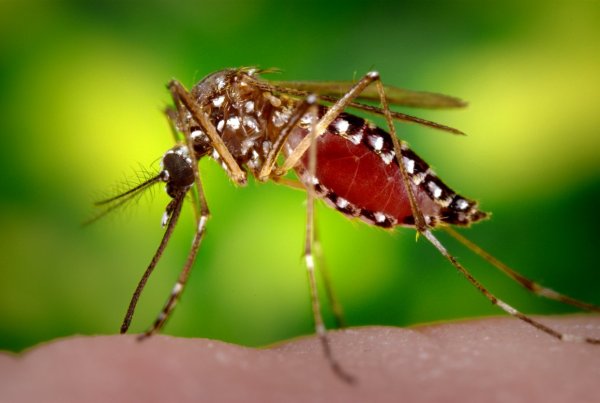
~ Aedes ~


softly it alights,

a vector of misery.

odious insect


~Richard

Aedes aegypti
License: Public Domain (James Gathany, Scientific Photographer, CDC)


Blog at WordPress.com.

Up ↑

MrReid.org

Stuff that interests Mr Reid, a physicist and teacher

From 1 Blogger 2 Another

Sharing Great Blog Posts

Journeys Through Pre-World War 3 Britain

Travelling the overcast isles

cancer killing recipe

Inspiration for meeting life's challenges.

the poet's billow

a resource for moving poetry

Lordess

Welcome to my world.

Rustic Rumination

Mind over matter

Stephen Liddell

Musings on a mad world

thisisyouth

Travel. Climbing. Characters. True stories, well told.

OPOD blog

Adventuring the globe whilst based in the beautiful PNW, with a focus on fitness & adventure travel, conservation and a healthy balanced lifestyle. All with my beautiful partner in crime, Stephanie!

Fictionspawn

Games, Illustrations and Short Stories

2Richards, Inc.

Success By Design

Sauce Box

Never get lost in the Sauce

Jim Kayalar Photography

Photo Book Store

DADDYSCUISINE

Happy Eating

in cahoots with muddy boots

Cooking, gardening, traveling and photographing around the globe

P e d r o L

storytelling the world

The New Renaissance Mindset

Perspectives on Lifelong Learning, Education, & The Arts